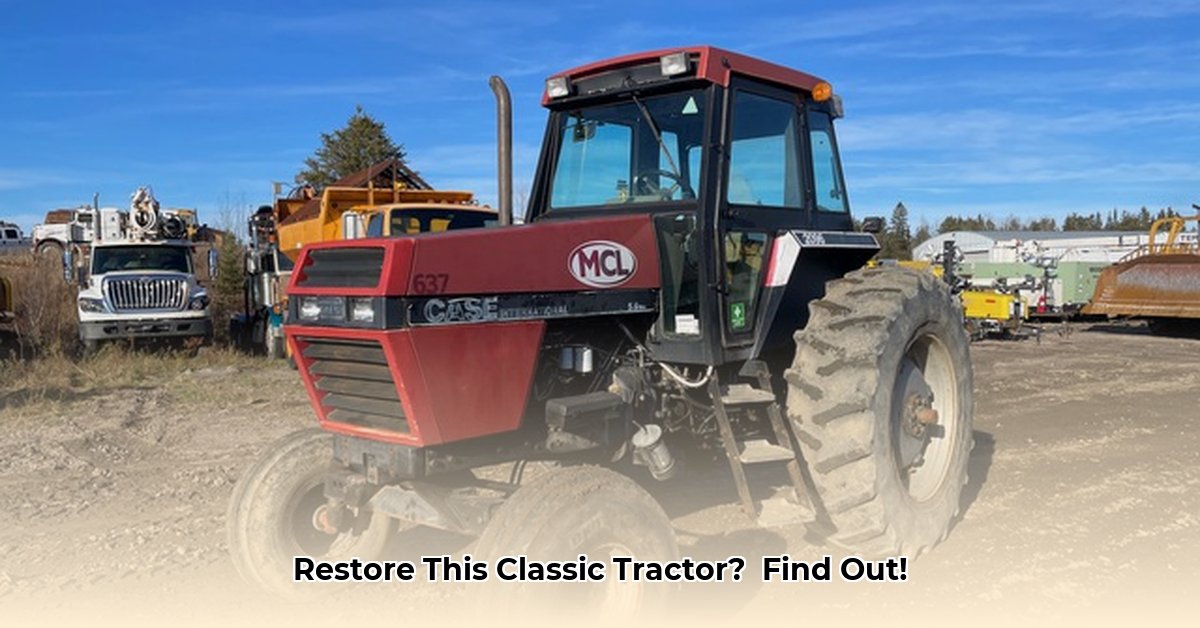
The Case 2096 tractor, a robust workhorse from the 1980s, holds a special place in agricultural history. This guide delves into its technical specifications, restoration process, and current market value, offering insights for owners, prospective buyers, and collectors. We'll explore its unique features, uncover its place within the Case legacy, and provide actionable advice to ensure your 2096 remains a powerful and valuable asset. For more on Case tractors, check out this helpful resource.
Technical Specifications and Overview
The Case 2096 represents a significant chapter in Case's history, blending dependable mechanical design with emerging technologies. Its robust construction and powerful performance made it a popular choice for farmers demanding reliability and versatility. But what exactly powered this agricultural icon?
The heart of the 2096 is typically a powerful six-cylinder diesel engine, renowned for its torque. However, horsepower and displacement varied slightly depending on the model year and specific options. The transmission system is a key differentiator, available in manual, powershift, or (rarely) automatic configurations. This choice significantly impacted the tractor's value and ease of use. The hydraulic system, designed to efficiently power various implements, is another vital component. A three-point hitch system is typically included, facilitating the attachment of a wide range of tools. The power take-off (PTO), usually offering 540/1000 RPM options (though this can vary), is crucial for powering equipment like mowers and balers.
Isn't it fascinating how a machine's specifications can dramatically influence its performance and legacy?
| Component | Typical Specifications | Important Considerations |
|---|---|---|
| Engine | Typically a 6-cylinder diesel, delivering substantial torque | Horsepower and displacement varied slightly year to year; consult original documentation for exact figures. |
| Transmission | Manual, powershift, or (rarely) automatic transmission | Transmission type heavily influences both value and usability. |
| Hydraulic System | High-flow system, usually with a three-point hitch | Essential for efficient operation of various agricultural implements. |
| PTO (Power Take-Off) | 540/1000 RPM (or similar, depending on model year) | Crucial for powering external equipment; verify RPM with your tractor's documentation. |
Always consult the original owner's manual or Case IH documentation for precise specifications for your particular model year and configuration. Variations exist.
Maintenance and Repair: Keeping Your Case 2096 Running Smoothly
Regular maintenance is crucial for prolonging the life of your Case 2096. Preventive care significantly reduces the risk of costly repairs down the line. This includes routine checks of fluids (engine oil, coolant, hydraulic fluid), filters, and belts. Addressing minor issues promptly can prevent them from escalating into major problems. A well-maintained 2096 is not only more reliable, but it also enhances its resale value. Have you ever considered the long-term cost savings of regular preventative maintenance?
Common repairs often focus on the engine, transmission, and hydraulic systems. These systems are complex, and tackling repairs without adequate mechanical knowledge and tools can be challenging. Consider consulting a qualified mechanic specializing in vintage farm equipment. Remember, safety should always be your top priority when working on machinery.
Restoration Guide: A Step-by-Step Approach
Restoring a Case 2096 is a labor of love, requiring significant time, skill, and resources. It's a rewarding journey for enthusiasts, but a realistic assessment of your capabilities and resources is essential.
1. Assessment and Planning: Begin with a thorough inspection, documenting the condition of each component. Create a detailed parts list, including replacements that will be needed.
2. Disassembly: Meticulously disassemble the tractor, taking detailed photos and notes. Label and organize parts carefully.
3. Parts Sourcing: Locating parts can be challenging. Online forums, salvage yards, and Case IH dealerships are potential sources. Be prepared for a long search.
4. Cleaning and Repair: Clean and repair or replace damaged components. This may involve welding, machining, painting, and other specialized skills.
5. Reassembly: Reassemble the tractor carefully, following your notes and photos. This requires patience and precision.
6. Testing and Fine-tuning: Thoroughly test all systems to ensure proper functionality. Address any remaining issues.
Market Value and Collectibility: What’s Your Case 2096 Worth?
The value of a Case 2096 tractor is highly variable, depending on several critical factors. A fully restored tractor in pristine condition commands a significantly higher price than one requiring significant repairs. Rarity of certain configurations or options also influences value, as do the hours of operation and the preservation of original components. Tractors with low operating hours and original features are generally more desirable to collectors. A professional appraisal from a qualified equipment evaluator can provide a reliable assessment of value, informing your buying or selling strategy.
Conclusion: A Legacy of Power and Endurance
The Case 2096 tractor stands as a testament to the ingenuity and durability of earlier agricultural machinery. Whether you're a farmer, collector, or simply an admirer of classic machinery, understanding its technical details, restoration process, and market value offers valuable insights. This guide serves as a resource, offering a blend of technical precision and engaging storytelling, to help you appreciate and preserve this piece of agricultural history.